
 CINCINNATI LOCKSMITH

Explain what the business needs from the door
Describe the use of the door before you describe the lock. Does it open to customers all day, serve staff between shifts or get opened for deliveries at certain hours? What happens if it stays out of use for an hour? If the building has several entrances, say which ones are still available. That gives the person assessing the door a practical way to understand the impact of the fault.
A suite door in a Downtown office building may have different rules from a storefront. Access to the lobby, freight entrance and your suite can each involve a different person. Tell us which door you control and where someone can meet us. If building security needs a name or a call in advance, let them know a vendor may be coming and ask what information they require.
Separate a latch problem from an access change
A door that can be locked only by pulling it against its frame should be checked for how it closes. A handle that moves freely without opening the door calls for a look at the hardware. Explain what you see at the point of failure. If the latch catches on the frame, tell us whether that happens all the time or when people let the door shut on its own. Knowing how frequently a door is used helps narrow down what needs attention.
If a tenant has moved out or an employee has left with a key, the job may be an access change even when the door works normally. A compatible lock can sometimes be rekeyed while keeping the same handle and finish. If the lock is worn or damaged, ask whether there is a reason to fix or replace it at the same visit. Record who needs access before the change so you can control when the old keys stop working.
Plan around staff, tenants and deliveries
Think of a Madison Road business with customers using the public entry while staff bring in supplies from the rear. A repair on the public door needs a plan for people arriving from the sidewalk. A repair on the service door may instead affect a single delivery window. Decide who will be available to open the building, where visitors should enter during the work and when the repaired door needs to go back into use.
If the property manager wants the work coordinated with another vendor, exchange names and contacts before anyone arrives. A storefront frame, a lock and an automatic access system may be supported by different people. Ask who will be responsible for solving each part of the problem. That can prevent the business from paying for separate visits that both stop at the same point.
Ask about the hardware before ordering anything
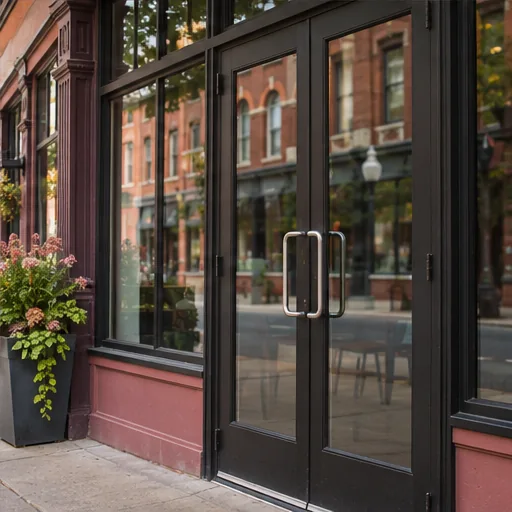
A replacement needs to suit the door and the way people use it. A glass storefront in a narrow metal frame has different hardware from a solid wood office door. A handle that must work from both sides is different from an employee door that should remain locked from outside. Tell us whether you have a key, a code, a card, a mechanical latch or some combination. A photo of the installed hardware and frame can help a conversation about fit.
If the door serves as an exit or has safety markings, let us and the building manager know before changes are planned. Keep exit access clear and follow the property's procedure for any required approval. The goal is to keep the door's intended function while addressing the fault. Ask whether the proposal would change the way staff leave the building, lock up at the end of the day or grant access to a visitor.
Agree on a scope that your team can approve
Before work begins, identify the affected openings by floor, suite or entrance name. Ask whether the proposal includes an adjustment, rekeying or new hardware and what would require another approval. If the problem has damaged the frame as well as the lock, ask which part can be addressed in the visit and who should check the rest. It's useful to know what can be secured that day if the needed part isn't immediately available.
Decide who will receive any updated keys or access information and how you'll tell the people affected. If you use a sign-out sheet, mark the specific doors changed and the date. Give the opening shift a way to reach the correct contact if the door still feels wrong in regular use. A short note for the next shift is easier to follow than asking staff to remember a verbal update passed along during closing.
If the door was hit by a cart or began failing after work on the storefront, find out what the people who were there saw. A photograph from before the damage and the contact for the property owner can help everyone agree on what is affected. Ask the person approving the work to be reachable during the visit, especially if a second fault would affect how the business closes that evening.
Keep the next call focused
If you manage several doors, take a few minutes after a visit to note which ones should be checked later. An employee entrance that takes pressure to close or a tenant door that rattles can become a recurring distraction. Share observations with the property manager or the person responsible for maintenance. That gives you a useful record the next time you need to decide whether the issue comes from the door, the hardware or how it is used.
For commercial locksmith help in Cincinnati, call with the building address, the opening involved and the name of someone who can approve the work. Tell us what the door needs to do during the next shift. We'll talk through the issue, clarify what needs to be inspected and help you plan access around the business hours and people who depend on that particular door.